The government is going all out to spread awareness about the new indirect tax regime, and training lawmakers is being seen as a necessary first step.
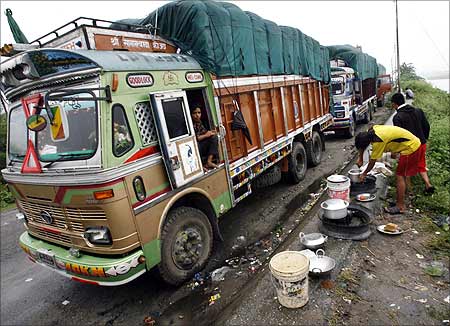
According to the draft, in the northeastern states the threshold is at Rs 500,000.

The shift from 'one country, one tax' to four tax rates could dilute possible gains on GDP, warns T N Ninan.

The GST Council on Saturday is expected to extend the date for IGST exemption and cess on imports

Govt doesn't buy restaurants' input tax excuse and has swing into action and looking into profiteering complaints on social media against prominent restaurant and franchise chains.

From the roll-out of GST to H1B visa problems, the government needs to quickly deal with various disruptions.

The revised salaries of central government employees are likely to be paid from July 1, 2016.

No mention of cab aggregators in GST bills

Criticising various provisions in the proposed GST regime, Moily said it will be a "technological nightmare" and the anti-profiteering provisions in it are "far too draconian."

Low consumer demand, a slide in investments and troubles in the banking sector should prompt the government to recalibrate taxes and expenditure. It is also important to ramp up spending on health care and education, says CII president Sumit Mazumder.
After the April-July fiscal deficit data was released on August 31, several analysts hinted that the government may need to go for cuts in capital expenditure to meet the fiscal deficit target.

The CAD in 2012-13 was at 4.7 per cent of GDP and in 2013-14 it will only 1.7 per cent, the Finance Minister said.

Jaitley increased the excise duty on most tobacco products by 10-15 per cent.

Companies feel higher rates in India would not be justified.

Opposition members in the Lok Sabha on Monday blamed the Bharatiya Janata Party-led central government's policies for the price rise and accused it of ignoring the plight of common people, saying kitchens will soon "see a lockdown" if the Centre does not take corrective measures.

'So far, the government has sanctioned more than Rs 300 billion as GST refunds,' Ansh Bhargava and Aditya Singhania point out.

The dates of general elections in 2019 and the presentation of the final Budget of the Modi government are so far removed from each other that Jaitley is not under any pressure to present a populist Budget. Instead, he could well unveil an array of schemes and proposals that he believes are necessary for the economy, even if a few of them could be unpopular, says A K Bhattacharya.

The 6-member Monetary Policy Committee, headed by Reserve Bank of India Governor Urjit Patel, in its fifth bi-monthly review, kept the repo rate unchanged at 6 per cent and reverse repo at 5.75 per cent.
It said the money supply recovered to its pre-demonetisation level in mid-2017 and is now increasing steadily, similar to the previous trend.

Ironically, West Bengal, which has been seeking a postponement of the GST roll-out, has fared better among most other states.

Women candidates have bagged the three top slots in the prestigious Civil Services examination to select Indian Administrative Service and Indian Police Service officers among others.

Finance Minister Nirmala Sitharaman presents her fourth Budget in Lok Sabha on Tuesday.

If international crude oil prices zoom past the current level of about $90 per barrel and move towards $100 and beyond, middle-class consumers are not going to keep quiet about their discomfort, points out Arun Balakrishnan, former chairman and managing director, Hindustan Petroleum.

Preparing legal framework to protect states from revenue loss.

The Empowered Committee of State Finance Ministers got its new chairman on Monday in Jammu and Kashmir's Abdul Rahim Rather.

India's GDP had recorded 7.5 per cent growth in the April-June quarter of last fiscal.
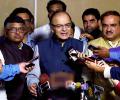
The Centre is likely to introduce the Central GST and integrated GST bills in late November or early December in the ongoing session in the form of money Bills.

Four decades of federal evolution made India more secure, but coronavirus is reversing that. Modi's central government has tasted power again and is unlikely to give it up, notes Shekhar Gupta.

FM should avoid proposals such as to tax financial transactions and fringe benefits

The Budget decides to take the lead in revving up infrastructure.
Businesses need to get on board in 15 days, ahead of indirect tax roll-out


SEZs account for just about a third of India's merchandise exports (and roughly the same proportion of services exports). Yet, the notion of creating global manufacturing centres of the kind that propelled China to superpowerdom retains a durable appeal within the Indian policy-making establishment, notes Kanika Datta.


Spiralling prices pinched the pocket of consumer as edible oil, fuel and many other commodities turned dearer this year amid pandemic-induced disruptions but the inflationary pressure is anticipated to ease, though marginally, in the coming months. As consumers, at retail as well as wholesale levels, are willy-nilly learning to live with the new normal of curbs to contain the spread of coronavirus infections, experts are of the view that elevated inflation is likely to stay longer. After dealing with the devastating blows from the second COVID wave, especially during the April-June period, the economy is well on the revival path but the emergence of Omicron might unsettle the recovery trajectory in the short term.

'... the government provides adequate cash and kind support for the poorest of the poor for survival... ...conditional cash and skilling support for the economically poor to raise their incomes to adequate levels... ...and make functional arrangements for providing unemployment allowance to the vulnerable poor during disasters like the present one.'

Chief Economic Advisor Arvind Subramanian's interview.

Emerging markets facing 5th year of slow growth: World Bank.

We should work in unison to boost growth: FM

The entire Budget-making exercise will be advanced by 3-4 weeks so as to complete the legislative part of financial business before April 1, the start of a financial year
 © 2026 Rediff.com - Advertise with us - Disclaimer - Privacy Policy - Sitemap - Feedback - About us - Terms of use - Grievances